Can this sticky powder truly change construction, agriculture, and the climate? “It is of national importance”

A sand powder that sticks like cement and extracts nitrogen from the soil: it sounds like a miracle cure. Sebastiaan Ooms built the machine that creates it, and the jury of the Drechtsteden Innovation Award was convinced. Can this truly transform construction, agriculture, and the climate?

In the PF Innovation workshop on Planckstraat in Dordrecht stands a massive machine that grinds sand, concrete rubble, and glass into an ultra-fine powder using a new method. Sebastiaan Ooms discovered that this process gives the material entirely different chemical properties.

The powdery sand becomes adhesive, allowing it to partially replace the binding function of cement in concrete. “We can break that concrete down again and recycle it endlessly. This allows us to use this building material much more efficiently than we do now.”

Because cement is produced at high temperatures, its production is responsible for approximately 8 percent of global CO2 emissions. With Ooms’ invention, less cement is required in concrete, which is a win for the climate.

When spread over a field as a soil conditioner, the powdered sand attracts nitrogen particles from the soil, which plants then use for nutrients. “As a result, it can replace synthetic fertilizer,” Ooms says. “But it also removes nitrogen from the soil, potentially offering a solution to the nitrogen crisis in the Netherlands.”
“Could be of national importance”

He developed and built the machine himself and has been granted a patent for it. “It is an invention that could be of national importance. We are currently creating floors using this material. It has endless applications, and we are still discovering them,” he says.

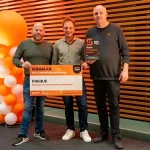
He wants to increase awareness of his invention among a larger group of companies and clients and was looking for a platform to do so. He finally found that stage during the presentation of the annual Drechtsteden Scale Innovation Award, which he won.

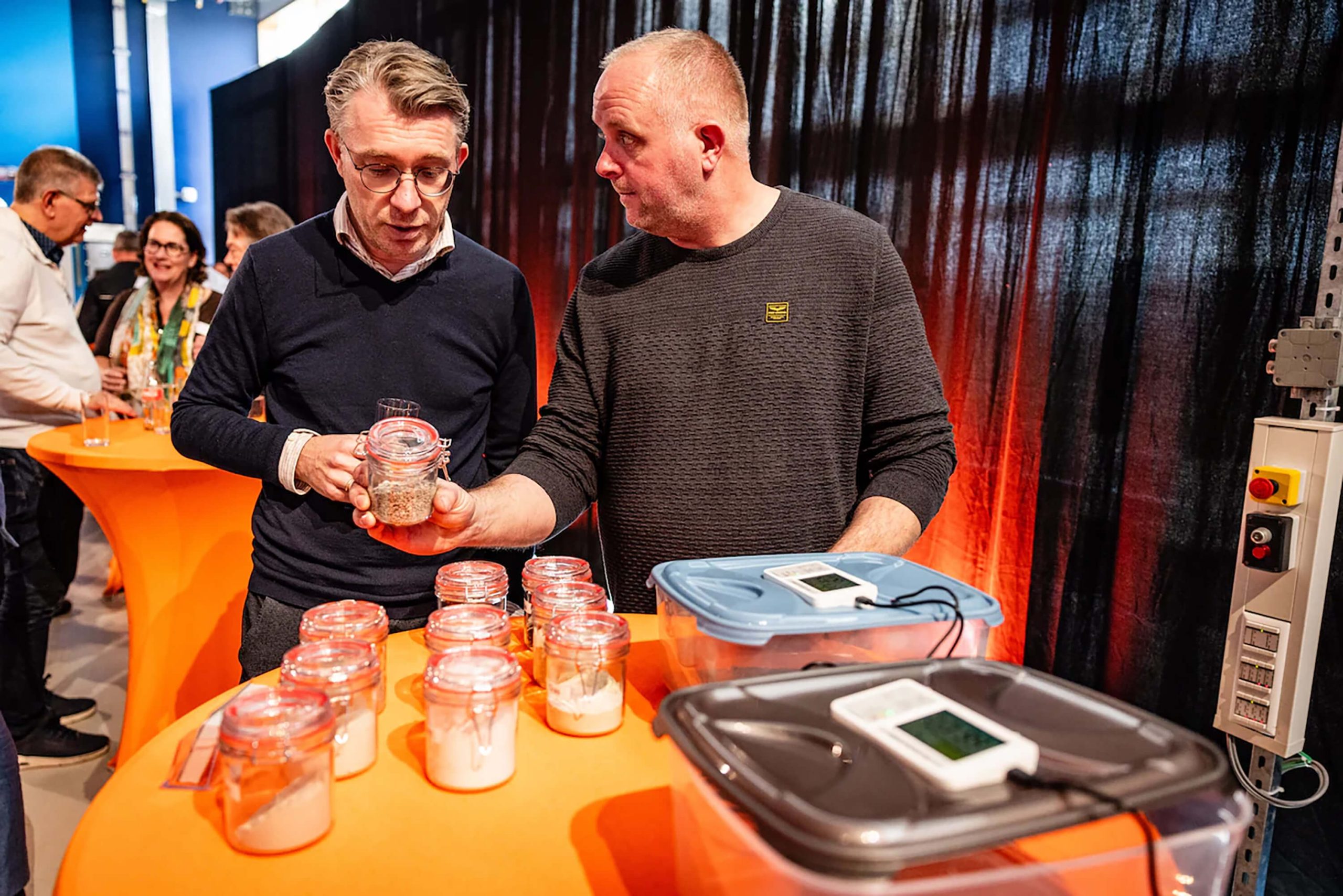
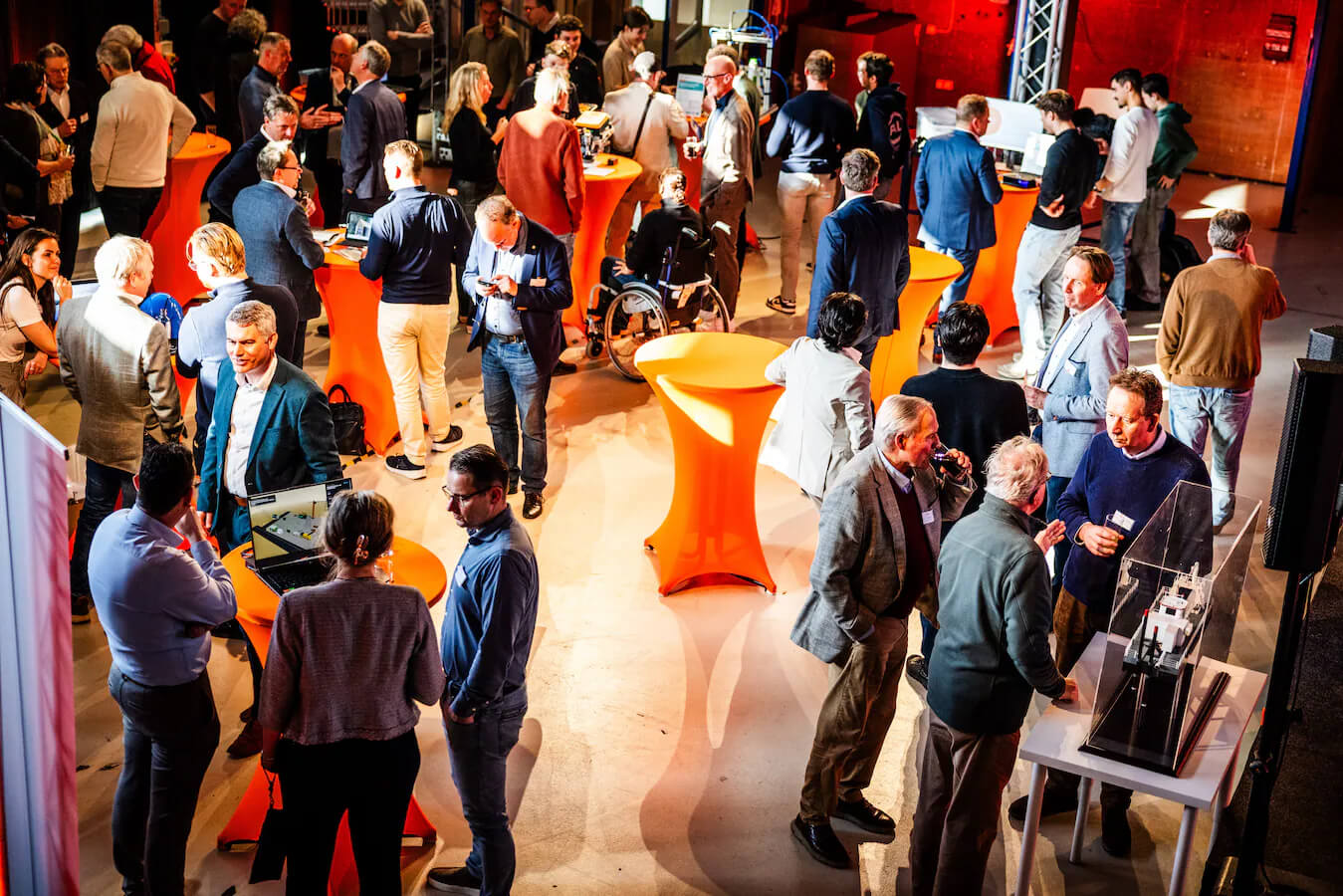
PF Innovation was one of eight nominees. They presented themselves during a trade fair at the Duurzaamheidsfabriek at the Leerpark in Dordrecht. There, Ooms’ jars of sand, concrete rubble, and ground powder drew a lot of attention. His pitch to the jury was short, as was his reaction to winning the prize: “Cool.”

“Bas is mainly to be found in his workshop. That’s where he prefers to be,” said jury chairman August Eckhardt. “His machine is potentially a very beautiful innovation with many concrete applications in society.”

The tenth edition of the innovation award attracted a record number of twenty applications. Among the nominees were renowned companies from the region. According to Eckhardt, the competition was stiff.

Salt battery and a methanol tanker

Royal Van Twist from Dordrecht, an expert in emergency power supplies, was nominated for its salt battery, which the company has been marketing since mid-last year. This battery can store large amounts of electricity for extended periods. It is recyclable and, according to Van Twist, much safer than the widely used lithium-ion batteries, which can overheat and catch fire. “This battery cannot burn, which is why you can place it anywhere indoors,” says Stefan Mols of the company.

Two companies from the maritime sector competed for the award. Vink Diesel from Sliedrecht developed a hydrogen combustion engine for inland vessels, which emits no soot or CO2.

Currently, ships still use hydrogen in fuel cells for electric propulsion. Shipping company Unibarge from Hendrik-Ido-Ambacht will soon have its inland vessel, the Chicago, converted. It will be the first tanker in Europe to sail on methanol. This is a sustainable fuel that emits less CO2 and soot. “This proves that sustainability is also possible for existing inland vessels,” says fleet manager Marc Tieman.

Dairy farmer Matthijs Baan from Molenaarsgraaf has already won several innovation awards with his “ElkeMelk” and was nominated once again. His 120 cows are each milked separately, and their milk is bottled within ten minutes, featuring information about the cow and the flavor on the label. This makes the milk fully traceable for the consumer. “We are the only ones in the world doing it this way,” he says.

Other nominees included HQ Healthcare from Dordrecht, which aims to relieve the healthcare sector with its Self-Measurement Kiosk, and Ideko Cabinbouw, which seeks to address long construction times and housing shortages with small, ready-made homes.

Aquapeak from Gorinchem participated two years ago with a filter that can remove harmful PFAS from drinking water. This year, the company presented a mobile water purifier capable of producing 50 liters of clean drinking water per hour from contaminated ditch or river water. “It contains no PFAS, medicines, hormones, or other pollutants. We guarantee truly pure water for everyone, anytime, anywhere,” says founder Karel Thieme. He expects to sell the device primarily to aid organizations, the Ministry of Defence, or people preparing for disasters.

Source: AD – https://www.ad.nl/dordrecht/kan-dit-plakkerige-poeder-echt-de-bouw-landbouw-en-het-klimaat-veranderen-het-is-van-landsbelang~a011ecaa/

Switch The Language